



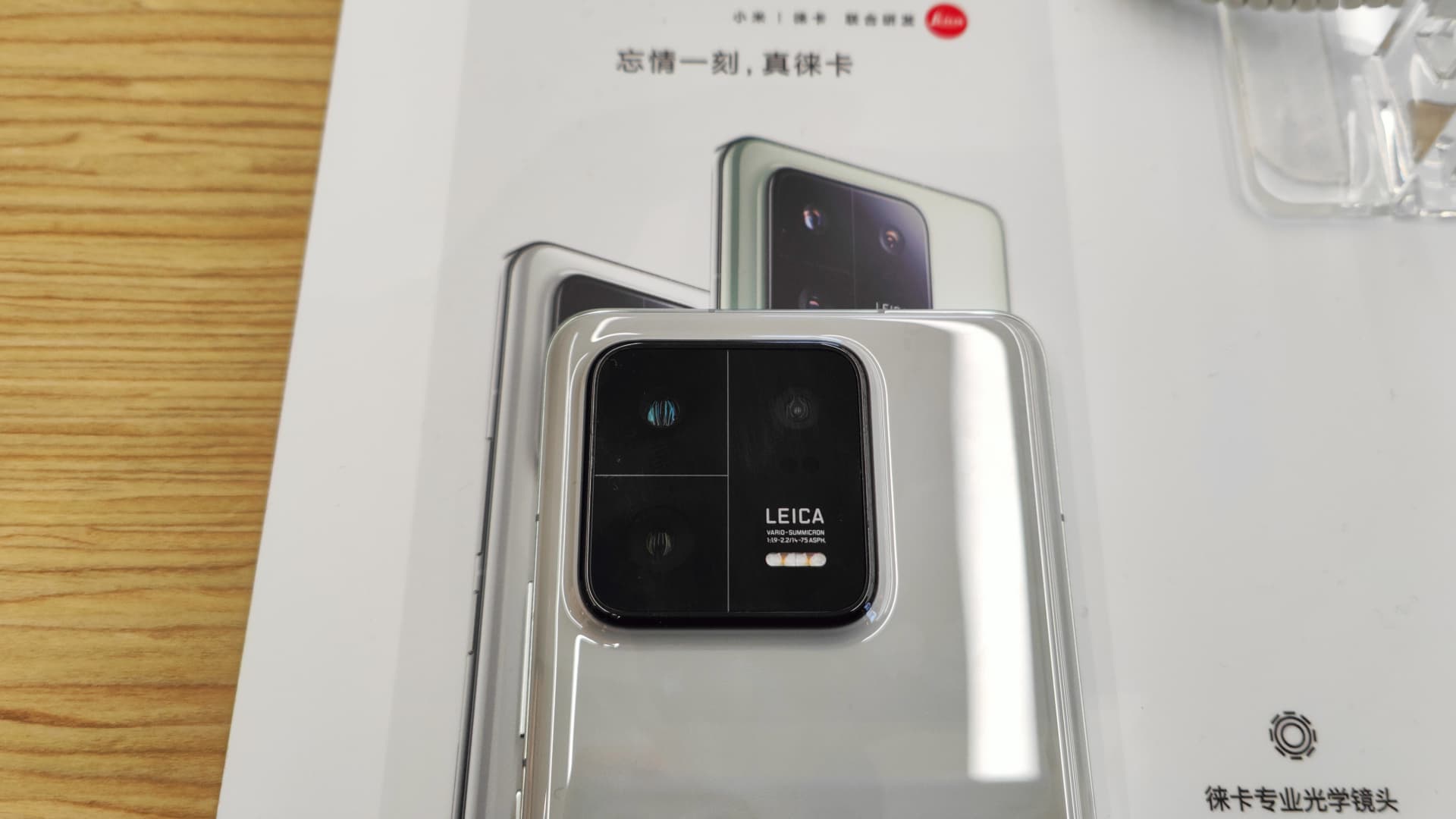
Xiaomi is attempting to push into the high end of the smartphone market with the Xiaomi 13 Pro. It’s going to pit the Chinese giant against rivals Apple and Samsung.
CFOTO | Future Publishing | Getty Images
Xiaomi launched its flagship smartphone globally on Sunday because the Chinese electronics giant attempts to take a slice of the high-end market and challenge Apple and Samsung.
The Xiaomi 13 and 13 Pro were originally launched in China in December, but now the Beijing, China-headquartered company is bringing the devices to markets overseas.
The Xiaomi 13 Pro device sports a 6.73-inch display and the newest Snapdragon 8 Gen 2 chipset from U.S. firm Qualcomm. It has a triple-lens camera and other premium features like ultra-fast charging. The corporate talked up the capabilities of its camera that it “co-engineered” with German firm Leica.
The Xiaomi 13 starts at 999 euros ($1,053) while the 13 Pro starts at 1,299 euros.
Xiaomi had a rough yr in 2022 with its smartphone shipments declining 26% year-on-year, in accordance with research firm IDC, the largest fall among the many top five biggest handset vendors. The corporate swung to a loss within the September quarter, the newest financial results available.
Xiaomi has faced quite a lot of headwinds, particularly a tougher macroeconomic environment with a slowing economy in China. A complete of 1.21 billion smartphones were shipped in 2022, which represents the bottom annual shipment total since 2013, in accordance with IDC.
“Xiaomi is facing multiple headwinds inside China from an ever-popular Apple iPhone, a surprisingly strong Honor, and fickle Chinese consumers who often switch between Android hardware brands in a flash,” Neil Mawston, an analyst at TechInsights, told CNBC via email.
Honor is the Chinese smartphone brand that was spun off from Huawei.
Xiaomi has become certainly one of the largest smartphone makers over time via a method of bringing out high-spec devices at very competitive price points. It began pushing into overseas markets around seven years ago, pursuing an identical strategy. But it surely is now trying to push into the upper end of the market, where margins are higher and the market remains to be growing.
High-end smartphones, those who cost over $800, accounted for 18% of the entire handset market in 2022, up from 11% in 2020, Canalys data shows. Xiaomi’s push into the premium tier will pit it against Apple and Samsung, which might be a challenge for the Chinese rival. Samsung and Apple devices accounted for 92% of the high-end market in 2022, in accordance with Canalys.
“Competing with Apple and Samsung is incredibly difficult. Not only matching market leading products, but particularly going up against enormous firms with exceptional brand awareness, high-end perceptions, experience focused solutions and product ecosystems with high user-stickiness,” Runar Bjørhovde, research analyst at Canalys, told CNBC via email.
Xiaomi is the newest Chinese smartphone player that’s attempting to crack the high-end of the market. Oppo launched its first foldable phone for the overseas market this month that costs greater than $1,000.