



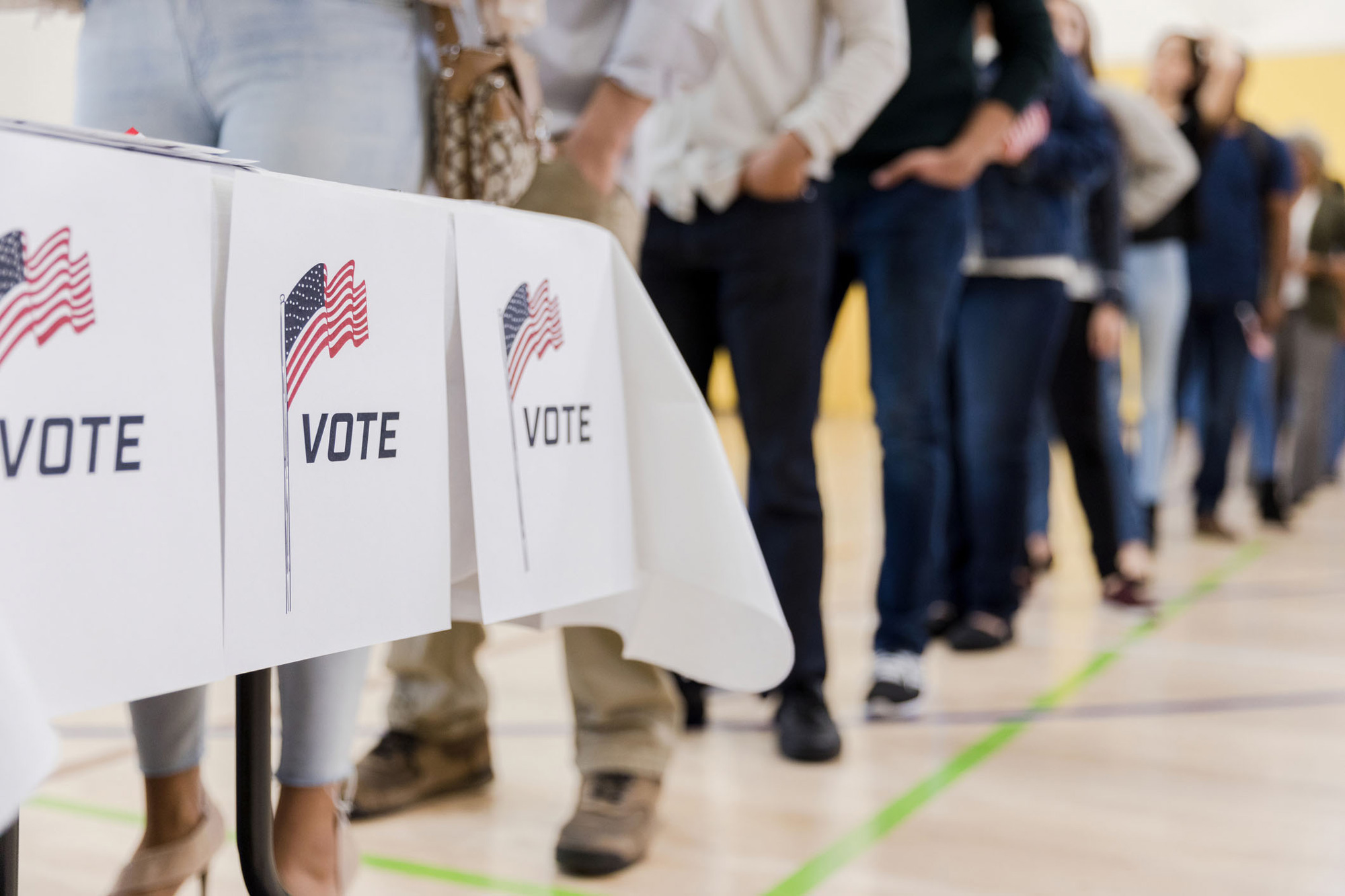
With lower than a month to go before the midterms, what are the important thing issues on voters’ minds? Last week, a panel of top political journalists, moderated by Jennifer Medina, national politics reporter at The Recent York Times, talked concerning the priorities and mood of California’s electorate.
The political landscape has already shifted an ideal deal because the starting of the 12 months. 4 months ago, the entire economic and political trends suggested a red-wave election, said Tamara Keith, White House correspondent at National Public Radio. But after the Supreme Court’s decision to overturn Roe v. Wade in June, “an election that was just going to be concerning the economy is now about a whole lot of other things, specifically, abortion and reproductive rights.”
The concentrate on abortion has also intensified national partisan battles over other social issues, including immigration and LGBTQ rights. “On this midterm, there is no such thing as a such thing as, ‘all politics is local’ anymore,” said Christine Mai-Duc, who covers state politics, housing, and the economy at The Wall Street Journal. “This can be a nationalized election in a much greater way than within the 2018 midterms.”
Nevertheless, “kitchen table” problems are still resonating with voters, especially in city, county, and state government races. “Cost of living, housing, and homelessness swamp a whole lot of other issues,” said Terry Tang, editorial page editor at The Los Angeles Times. She added that in local races, it’s less concerning the partisan divide and more about what candidates will do to unravel these pressing problems.
Newly redrawn district maps mean that even some incumbents are running on latest terrain. There’s a possibility for Latino voters to have more of a voice with the brand new maps, said Mai-Duc. However the political implications of this shift are unclear, given the ideological diversity of Latino voters. Mai-Duc emphasized the importance of ongoing coalition-building efforts—which some campaigns have began to undertake—in boosting participation. “Don’t just show up three weeks before the election and [hand out] a flyer in Spanish,” she said.
Due partially to the state’s changing demographics, rhetoric on immigration has played less of a task in California races than in other parts of the country, like Florida. Medina noted that the competitive congressional district 45 in Orange County was a bastion of anti-immigration rhetoric within the Nineties. Now the district is essentially made up of communities of color and there are two Asian American candidates. “I don’t see them duking it out over ‘who’s the American,’ which might have been the case just a few many years ago, said Tang.
As November 8 approaches, it’s price keeping in mind that there have only been three midterms in US history when the president’s party gained seats within the House. Yet Keith identified that this election is “a bit scrambled,” with indicators like party fundraising and motivation pointing in numerous directions. Voters could have to make their voices heard on the ballot to find out if this election will—or won’t—buck historical trends.
***
PPIC’s Speaker Series on California’s Future invites thought leaders and changemakers with diverse perspectives to participate critically, constructively, and collaboratively in public conversations. The aim is to present Californians a greater understanding of how our leaders are addressing the challenges facing our state.
PPIC is a nonpartisan, nonprofit organization. PPIC doesn’t take or support positions on any ballot measure or on any local, state, or federal laws, nor does it support, endorse, or oppose any political parties or candidates for public office. Any opinions expressed by event participants are theirs alone and don’t necessarily reflect any position of the Public Policy Institute of California.
With lower than a month to go before the midterms, what are the important thing issues on voters’ minds? Last week, a panel of top political journalists, moderated by Jennifer Medina, national politics reporter at The Recent York Times, talked concerning the priorities and mood of California’s electorate.
The political landscape has already shifted an ideal deal because the starting of the 12 months. 4 months ago, the entire economic and political trends suggested a red-wave election, said Tamara Keith, White House correspondent at National Public Radio. But after the Supreme Court’s decision to overturn Roe v. Wade in June, “an election that was just going to be concerning the economy is now about a whole lot of other things, specifically, abortion and reproductive rights.”
The concentrate on abortion has also intensified national partisan battles over other social issues, including immigration and LGBTQ rights. “On this midterm, there is no such thing as a such thing as, ‘all politics is local’ anymore,” said Christine Mai-Duc, who covers state politics, housing, and the economy at The Wall Street Journal. “This can be a nationalized election in a much greater way than within the 2018 midterms.”
Nevertheless, “kitchen table” problems are still resonating with voters, especially in city, county, and state government races. “Cost of living, housing, and homelessness swamp a whole lot of other issues,” said Terry Tang, editorial page editor at The Los Angeles Times. She added that in local races, it’s less concerning the partisan divide and more about what candidates will do to unravel these pressing problems.
Newly redrawn district maps mean that even some incumbents are running on latest terrain. There’s a possibility for Latino voters to have more of a voice with the brand new maps, said Mai-Duc. However the political implications of this shift are unclear, given the ideological diversity of Latino voters. Mai-Duc emphasized the importance of ongoing coalition-building efforts—which some campaigns have began to undertake—in boosting participation. “Don’t just show up three weeks before the election and [hand out] a flyer in Spanish,” she said.
Due partially to the state’s changing demographics, rhetoric on immigration has played less of a task in California races than in other parts of the country, like Florida. Medina noted that the competitive congressional district 45 in Orange County was a bastion of anti-immigration rhetoric within the Nineties. Now the district is essentially made up of communities of color and there are two Asian American candidates. “I don’t see them duking it out over ‘who’s the American,’ which might have been the case just a few many years ago, said Tang.
As November 8 approaches, it’s price keeping in mind that there have only been three midterms in US history when the president’s party gained seats within the House. Yet Keith identified that this election is “a bit scrambled,” with indicators like party fundraising and motivation pointing in numerous directions. Voters could have to make their voices heard on the ballot to find out if this election will—or won’t—buck historical trends.
***
PPIC’s Speaker Series on California’s Future invites thought leaders and changemakers with diverse perspectives to participate critically, constructively, and collaboratively in public conversations. The aim is to present Californians a greater understanding of how our leaders are addressing the challenges facing our state.
PPIC is a nonpartisan, nonprofit organization. PPIC doesn’t take or support positions on any ballot measure or on any local, state, or federal laws, nor does it support, endorse, or oppose any political parties or candidates for public office. Any opinions expressed by event participants are theirs alone and don’t necessarily reflect any position of the Public Policy Institute of California.