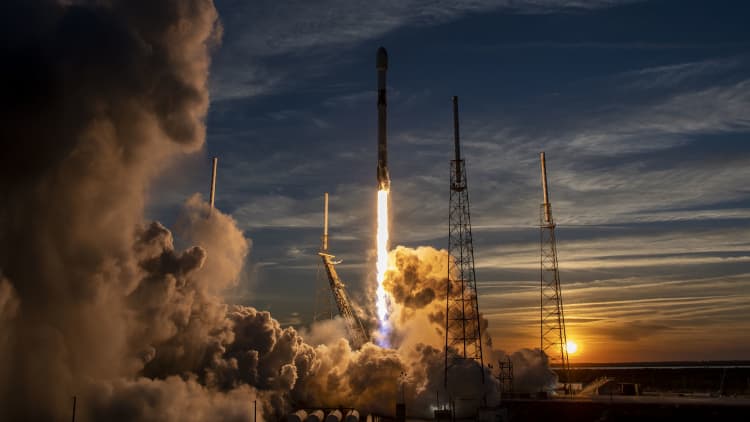



Electric vehicle start-up Lucid on Sept. 28, 2021 said production of its first cars for patrons has began at its factory in in Casa Grande, Arizona.
Lucid
Electric vehicle maker Lucid on Wednesday reported fourth-quarter revenue that fell wanting expectations after constructing just 7,000 of its Air luxury sedans last 12 months amid manufacturing challenges. But the corporate said it expects to make between 10,000 and 14,000 vehicles in 2023.
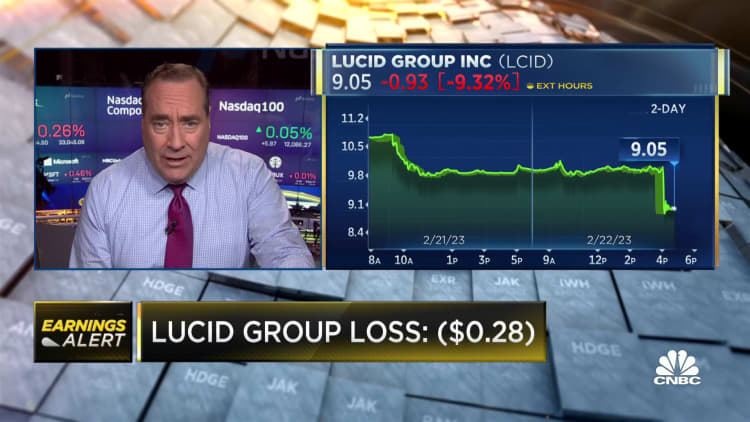
Shares of the corporate fell roughly 7% in afterhours trading.
Here’s what the corporate reported for the fourth quarter of 2022:
- Loss per share: 28 cents
- Revenue: $257.7 million, vs. $303 million, in response to Refinitiv consensus estimates
Lucid’s quarterly revenue marks a pointy increase from the identical period last 12 months, when it had just begun production of the Air sedan and brought in $26.4 million. The corporate’s bottom line likewise improved, coming in narrower than the 64-cent loss per share it posted within the year-ago period.
The corporate ended the 12 months with about $4.4 billion in money and roughly $500 million available via lines of credit, enough to last until the primary quarter of 2024, chief financial officer Sherry House told CNBC. Lucid had $3.85 billion in money as Sep. 30; it raised an extra $1.5 billion from Saudi Arabia’s Public Investment Fund and other investors via an equity offering in December. The Saudi public wealth fund owns about 62% of Lucid.
Lucid said in January that it produced 7,180 vehicles in 2022, well below its original expectation of 20,000 for the 12 months but enough to beat the lowered guidance it provided in August. However it delivered just 4,369 of those Air sedans to customers before year-end.
“Our goal in 2023 is to amplify our sales and marketing efforts to get this amazing product into the hands of much more customers all over the world,” CEO Peter Rawlinson said.
Lucid said it had greater than 28,000 reservations for its vehicles as of Feb. 21, down from “over 34,000” reservations in its last update on Nov. 7.
The corporate said in April that Saudi Arabia’s government had agreed to purchase as much as 100,000 of its vehicles over the following 10 years. Those vehicles aren’t included in its reservation totals.