



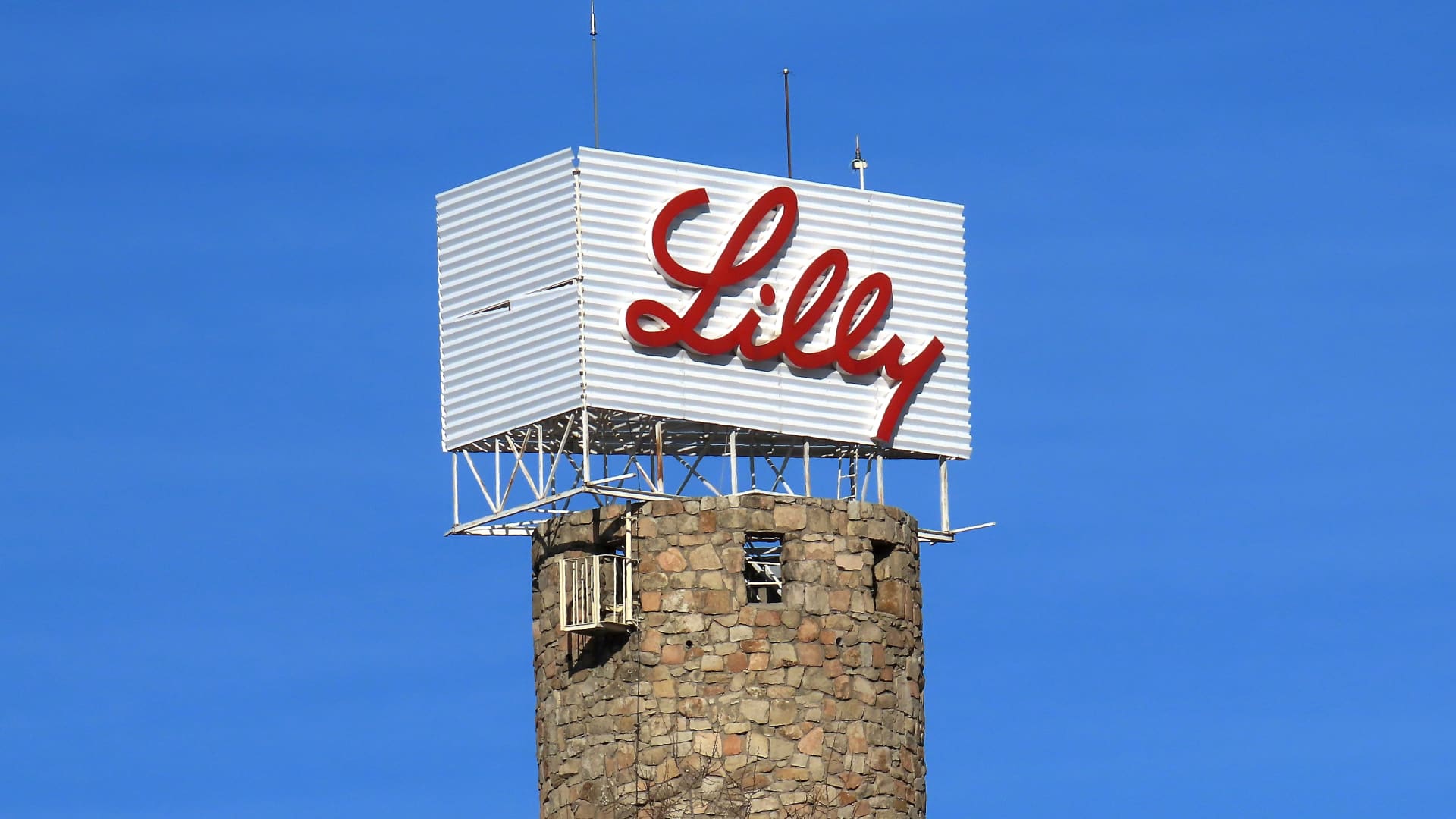
Eli Lilly and Company, Pharmaceutical company headquarters in Alcobendas, Madrid, Spain.
Cristina Arias | Cover | Getty Images
Eli Lilly’s experimental drug helped patients lose as much as 24% of their weight after almost a yr, the very best reduction seen within the obesity treatment space thus far, in accordance with latest mid-stage clinical trial results released Monday.
The phase two trial followed 338 adults who were obese or obese and either received the pharmaceutical company’s injection, retatrutide, or a placebo each week.
Patients who took a 12-milligram dose of retatrutide lost 17.5% of their body weight, or 41 kilos, on average after 24 weeks, compared with 1.6% for many who received the placebo.
Patients lost 24.2%, or 58 kilos, on average after 48 weeks. Those that took the placebo lost 2.1% of their body weight after that very same time period.
The trial’s researchers said average weight reduction didn’t appear to plateau after 48 weeks, suggesting an extended study could show much more. Eli Lilly is currently recruiting patients for a phase three trial.
That data suggests Eli Lilly’s retatrutide is the “only anti-obesity med thus far,” Michael Weintraub, an endocrinologist at NYU Langone Health, said in a Twitter post.
Eli Lilly’s other obesity drug Mounjaro, which is approved for type 2 diabetes, has helped patients lose as much as 21% of their weight in clinical trials.
Novo Nordisk’s Wegovy, cleared for weight reduction, has shown as much as 15% weight reduction in trials.
Like Wegovy and Mounjaro, Eli Lilly’s retatrutide is a weekly injection that changes the way in which patients eat and results in decreased appetite by mimicking certain hormones within the gut.
But Wegovy only mimics one hunger-regulating hormone called GLP-1, while Mounjaro mimics GLP-1 and one other hormone called GIP.
Retatrutide mimics three different hunger-regulating hormones: GLP-1, GIP and glucagon. That appears to have stronger effects on an individual’s appetite and satisfaction with food.