



A Reflection for the Twenty-third Week in Unusual Time
Readings: Exodus 32:7-11, 13-14 1 Timothy 1:12-17 Luke 15:1-10
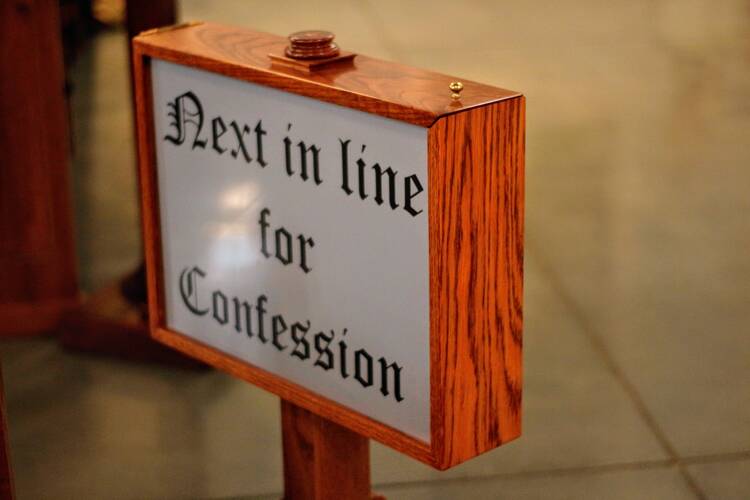
After I was a boy, almost nothing I said in confession altered the response of Father Kelly, our Irish pastor. “Say three Hail Marys and renew your confidence in God and in yourself.”
Once he did add something, little question to save lots of me from scruples. “You might have to entertain a thought for it to be sinful.” He meant that any notion could stray through one’s head. It’s the bad ones we welcome and nourish which are sinful. That took time for me to grasp.
As a confessor, I’m aware of my regular penitents, even those behind the screen, so I do vary my words and the penance imposed, because I don’t need to sound repetitive, but typically it will not be in response to what I’ve heard. Not even this line: “I’m so embarrassed to repeat the identical sin.”
Don’t be embarrassed. Sorrow for our sins, an awareness that now we have done mistaken and may do higher, is a present from God. Shame, a way that you just are loathsome, comes from the Evil One. He’s lying to you about yourself and about God. Not less than you might be confessing. That puts you ahead of the numerous, who sell the church, God and themselves short by abandoning the sacrament.
For those who left confession feeling bad, that may be a tragedy. Perhaps the priest didn’t consider sufficiently that he’s there to substantiate God’s mercy sacramentally.
You might be still within the fight. You might have not been knocked out of the ring. Is it possible that individuals who say that the sacrament is more trouble than it’s price, that they don’t need confession, have duped themselves? Dress up the reasoning as you’ll, but when you will have turned from the mercy of Christ, poured out completely on the cross and confirmed within the sacrament, you will have failed, a bit, to consider in our Lord. Why? Because you will have lost your confidence in Christ’s continuing presence within the church.
Even when there have been no God, we get out of life what we put into it. To my mind, that maxim essentially affirms the existence of God, but even in the event you cannot see that time, you realize the saying to be true. Individuals who go to the trouble of confession are happier people. As any psychologist can inform you, the very act of describing your life creates clarity and energy.
But what about that terrible priest in your past? For those who left confession feeling bad, that may be a tragedy. Perhaps the priest didn’t consider sufficiently that he’s there to substantiate God’s mercy sacramentally. He shouldn’t be at liberty to comment on what you say. He should speak warily.
That is a bonus of a relatively standard response. The penitent doesn’t wonder why the priest commented on one sin and never one other. Typically, the confessor should only speak in response to an issue or to supply some needed clarity.
Shame says, you won’t ever change; you have to be embarrassed. But neither God nor the church know anything of this.
But might I ask, how way back was your negative experience? Do you continue to consider it to be entirely the fault of the priest?
Finally—perhaps this will not be universal, nevertheless it is bankable—the one sins most confessors remember are their very own. We are saying to our own confessors, “I’m so embarrassed to repeat the identical sin.”
The Greeks defined God as everlasting, all powerful and unmoved. It was St. Thomas Aquinas who added a properly Christian attribute to this list, one born of the resurrection. God is pure act. We’re at all times starting, after which starting again. In between lies our exhaustion and our renewal.
God never began and never stops. God doesn’t grow weary. Once we confess our sins, God hears us from the virgin shores of eternity after which, within the sacrament of the church, speaks into our time. In God’s eyes we already stand before him within the life to come back. There, our constant flaws and repeated sins were blown away way back, like a small circle of dust.
Gladsome guilt brought you to confession. Sinful shame tries to inform you that it’s going to do you no good. Shame says, you won’t ever change; you have to be embarrassed. But neither God nor the church know anything of this. You might be the sheep that was lost, so very way back in life. So far as God within the sacrament is anxious, you were way back found and brought home. So renew your confidence in God and in yourself.


